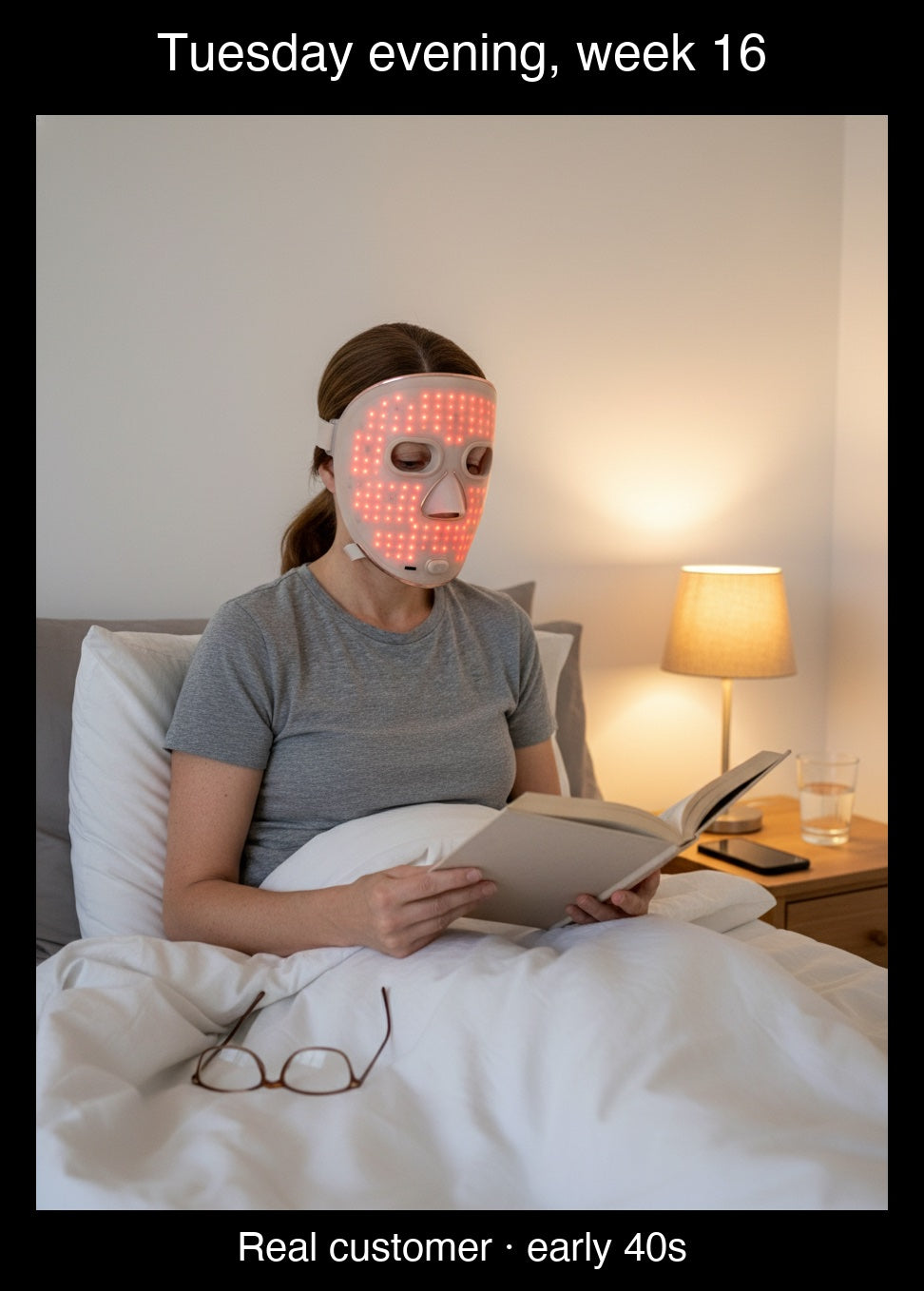
Most red light masks sold to women in their 40s are basically glowing toys. (I tested seven of them.)
Eight months. Four spreadsheets. Three engineers on the phone. Two returns to Sephora. One LuxeBeam that actually passes the three things that have to be right.
I
I'm not in the beauty industry. I'm a 41-year-old project manager who got obsessed with this in February, after a friend showed me the side-by-side photos from her dermatologist's clinic LED sessions and I asked the question I'd never asked before — what's actually in the box?
Eight months later, four spreadsheets, three engineers on the phone, two returns to Sephora, one annoying conversation at a wellness expo with a panel-vs-mask zealot, and seven masks tested on my own face — I have an answer.
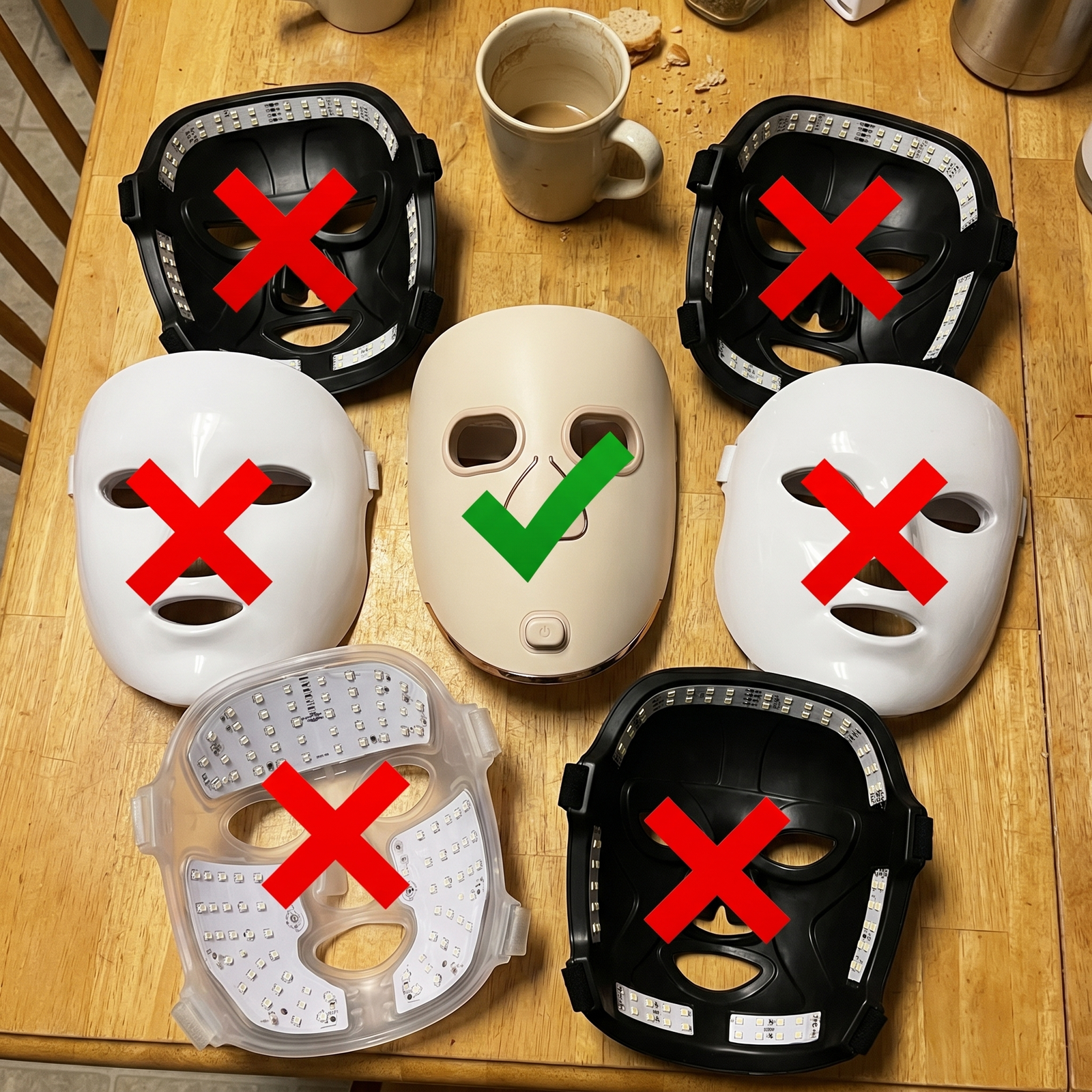
Most of them are glowing toys. The shade of red is wrong. Or the power's too low. Or they cover the upper face but skip the chin. Often all three.
Of the seven I tested, one wasn't.
I'm not getting paid for this. I have no affiliate code. I have no brand deal. What I have is the spreadsheet, the test data, and 14 weeks on the one that actually does what the clinic does.
If you're about to spend $200-650 on an LED mask, give me eight minutes before you do.
PART 1 · WHY I STARTEDMy friend Catherine. The clinic photos. The conversation that started this.
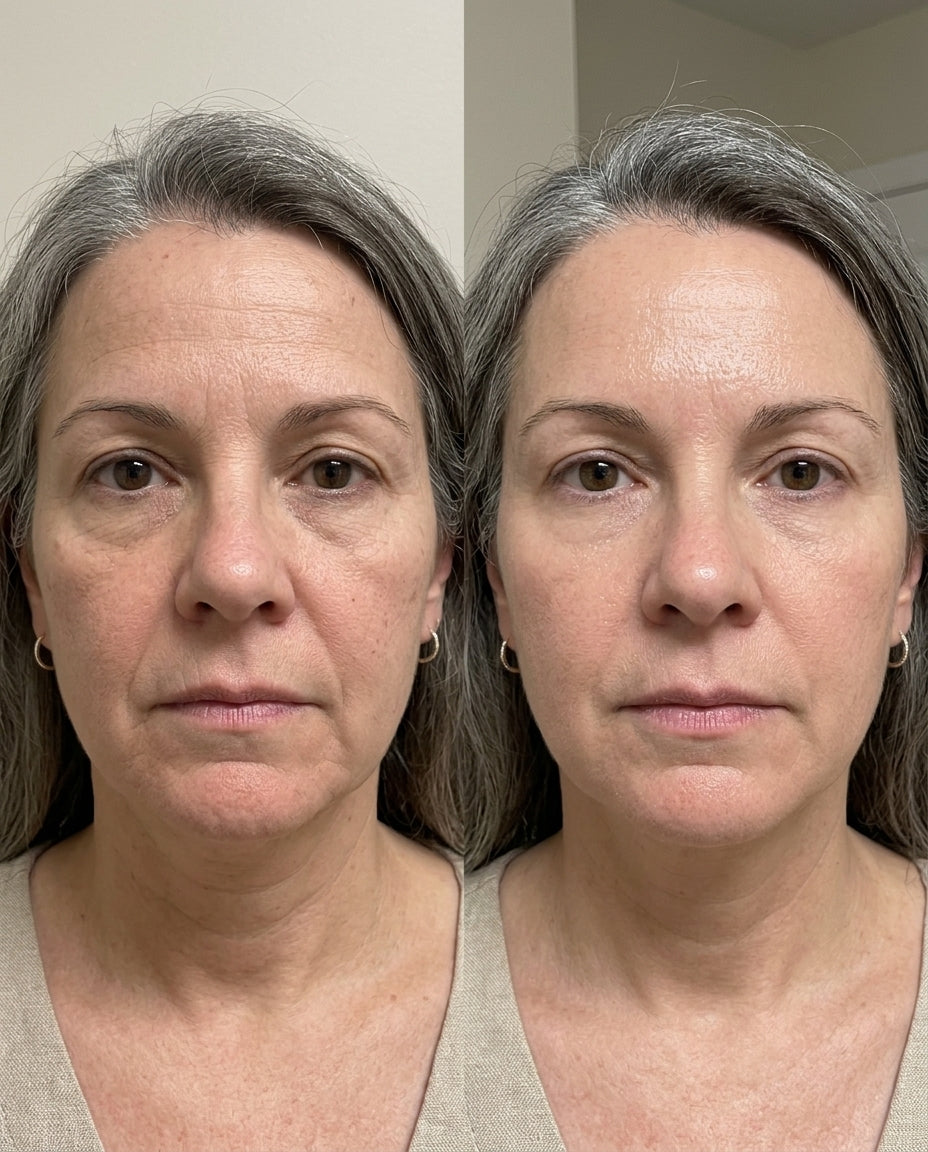
My friend Catherine is 47. She'd been doing clinic LED sessions twice a month for six months — $400 a session, $9,600 a year if she kept going — and in February she showed me her side-by-side photos.
The photos weren't dramatic. She didn't look 30. Her skin still had pores. She still had the line between her eyebrows from squinting at her kids' soccer games. But the texture was different. The redness she'd had on her cheeks for as long as I'd known her was almost gone. Her cheekbones looked higher because the slight hollowness underneath them was less hollow. She looked, very specifically, like she had been getting better sleep for six straight months.
I asked her how much she'd spent so far. She said $2,400. She said her dermatologist wanted her to keep coming for the next year and a half.
I told her I'd been thinking about an at-home LED mask. The cheap one. From Sephora.
She said, "Don't. You'll throw the money away." Then she said, "There are at-home versions that do what the clinic does. Most don't. Find the one that does."
That was the conversation. That was where this started.
PART 2 · WHAT I FOUNDThree things that have to be right. Most masks get one or two.
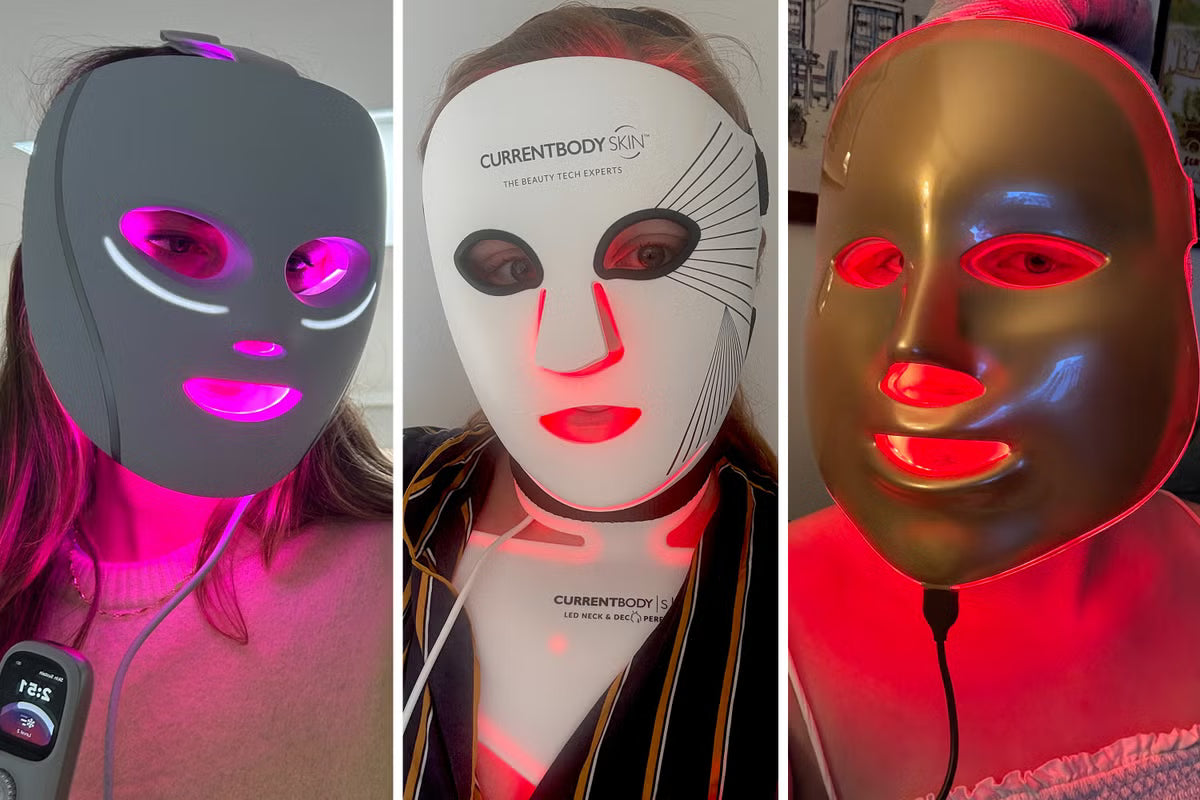
The first thing I figured out, after about three weeks of reading and one increasingly frustrating call with a Sephora associate who knew nothing, was that there are three things that have to be right for an LED mask to actually work.
The marketing language won't tell you which masks pass. The marketing talks about LED counts ("96 LEDs!") and modes ("anti-aging + acne + brightening + glow!") and FDA clearances. None of those are the things that matter. They're the things that distract from the things that matter.
The three things are these.
The three things
I tested seven masks. Six failed at least one of these. Here's what each test means in plain English.
TEST 1
Is it the right shade of red?
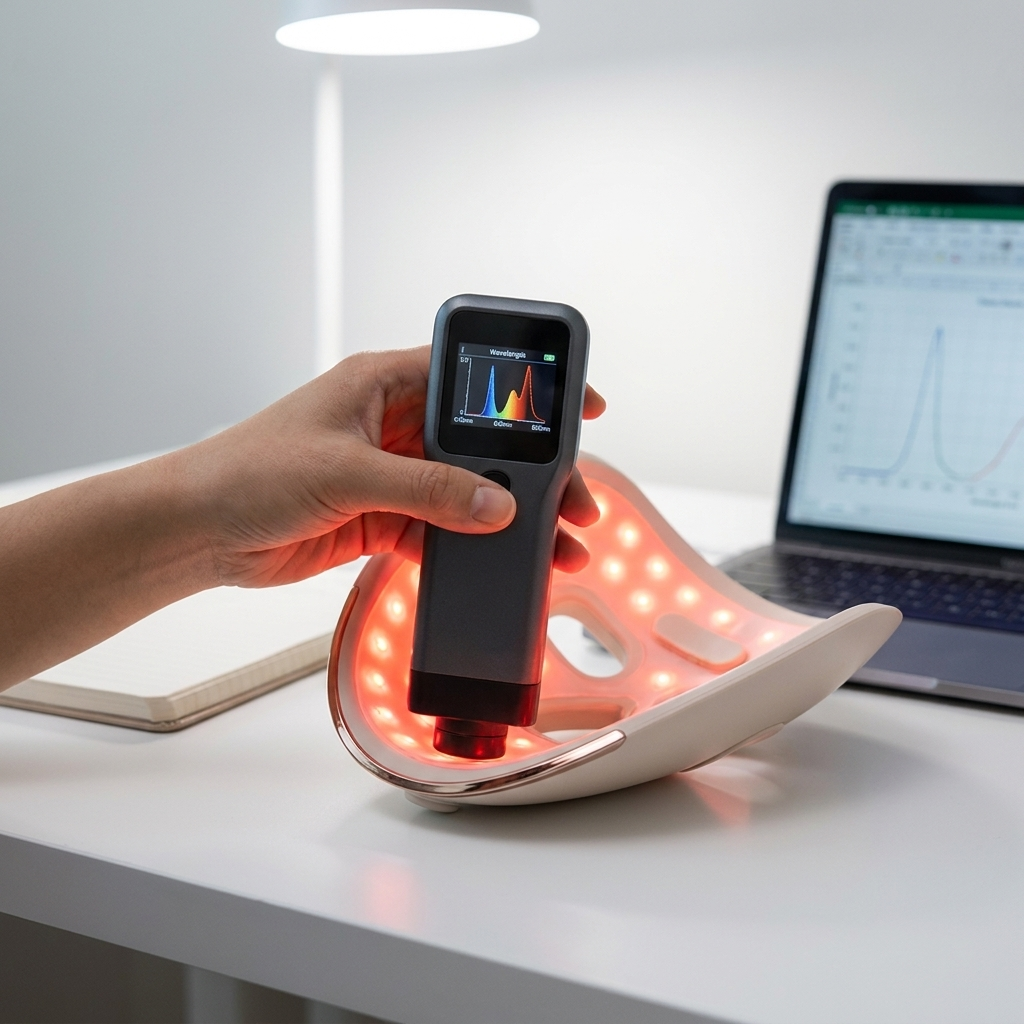
There are dozens of shades of red. The shade that does what red light therapy is supposed to do is a narrow band of warm red, plus a deeper invisible kind. Most consumer masks emit a shade slightly off — looks red, is the wrong red. Stays on the surface, does nothing underneath.
TEST 2
Is the light strong enough?
Even when the shade is right, most consumer masks underdeliver on power at the actual face surface. Not at the bulb. At the face. Most consumer masks deliver about a third to half of the clinic dose. Below the window, nothing happens.
TEST 3
Does it cover the chin?
Most LED masks were designed for Instagram. They cover the forehead, cheekbones, around the eyes — beautifully. They leave the chin entirely untreated. After 40, the chin is exactly where the visible aging shows up.
PART 4 · THE WORKWhat I did for the next five months
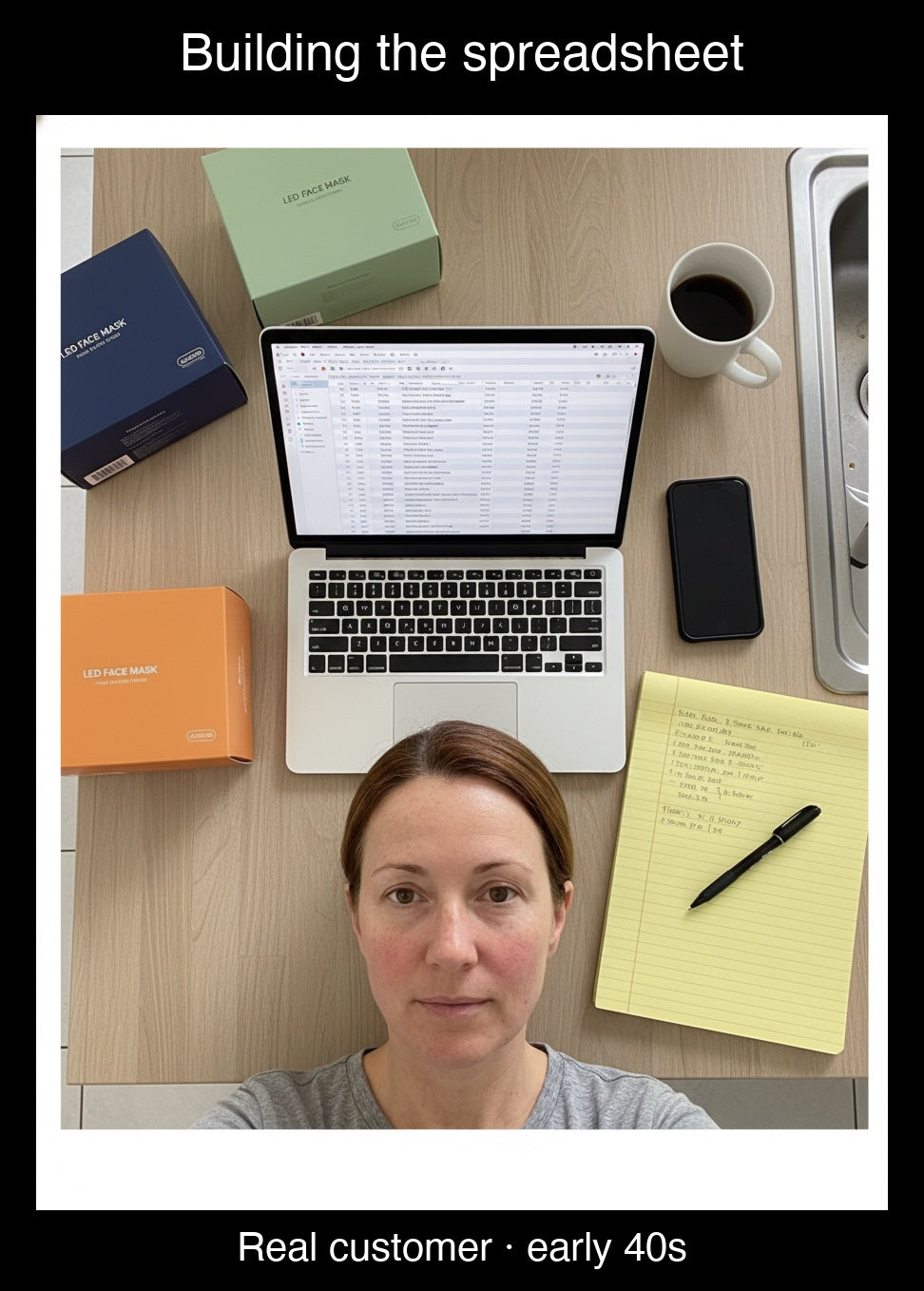
I built the spreadsheet. Columns: brand, price, shade emitted, dose at the skin (where I could find it — most brands won't publish it; that itself is a signal), coverage area, chin coverage yes/no, return policy, claims, what the brand could actually prove.
I called three engineers. One had been a medical-device sales rep. Two had worked on consumer LED products at companies you've heard of. They told me which brands' published numbers matched the third-party data and which brands' didn't. They told me the specific phrase brands use ("up to X mW/cm²") that means the device hits that number for half a second under perfect lab conditions and emits half that at your face on a real night.
I tested seven masks. Five went back. One I gave to my mother-in-law to test on her face. I kept one.
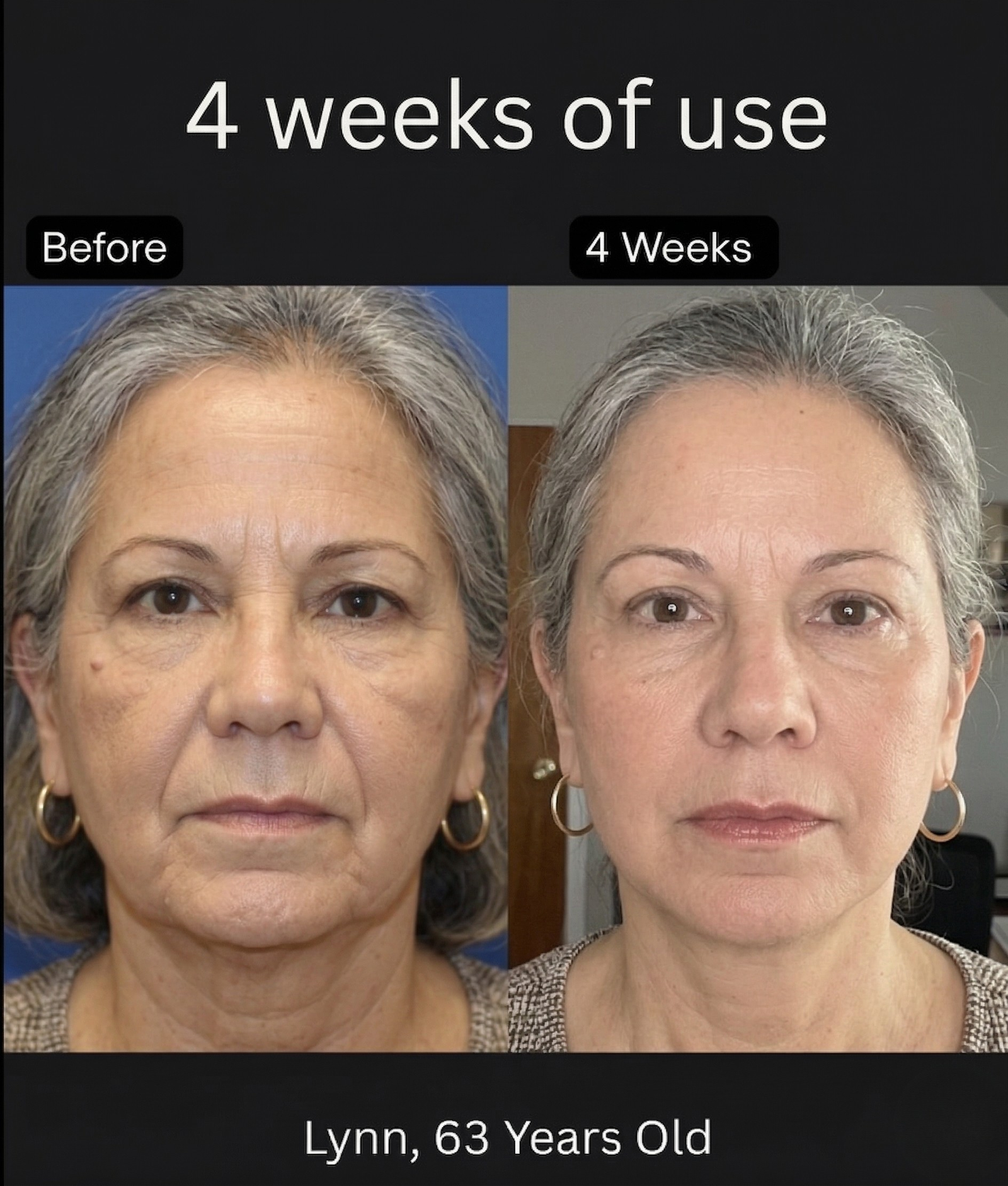
LuxeBeam — the at-home version of the Korean clinic protocol
The right warm red light. The clinic-strength dose. Full chin coverage. Recessed eyes (read while you use it). FDA-cleared. 60-day money-back guarantee.

PART 6 · WEEK FOURTEENWhat's specifically different. (Not what marketing would say.)
I want to be specific about what's happened, because the last thing this audience needs is more vague "transformation" claims. The community is policing those right now and I respect that.
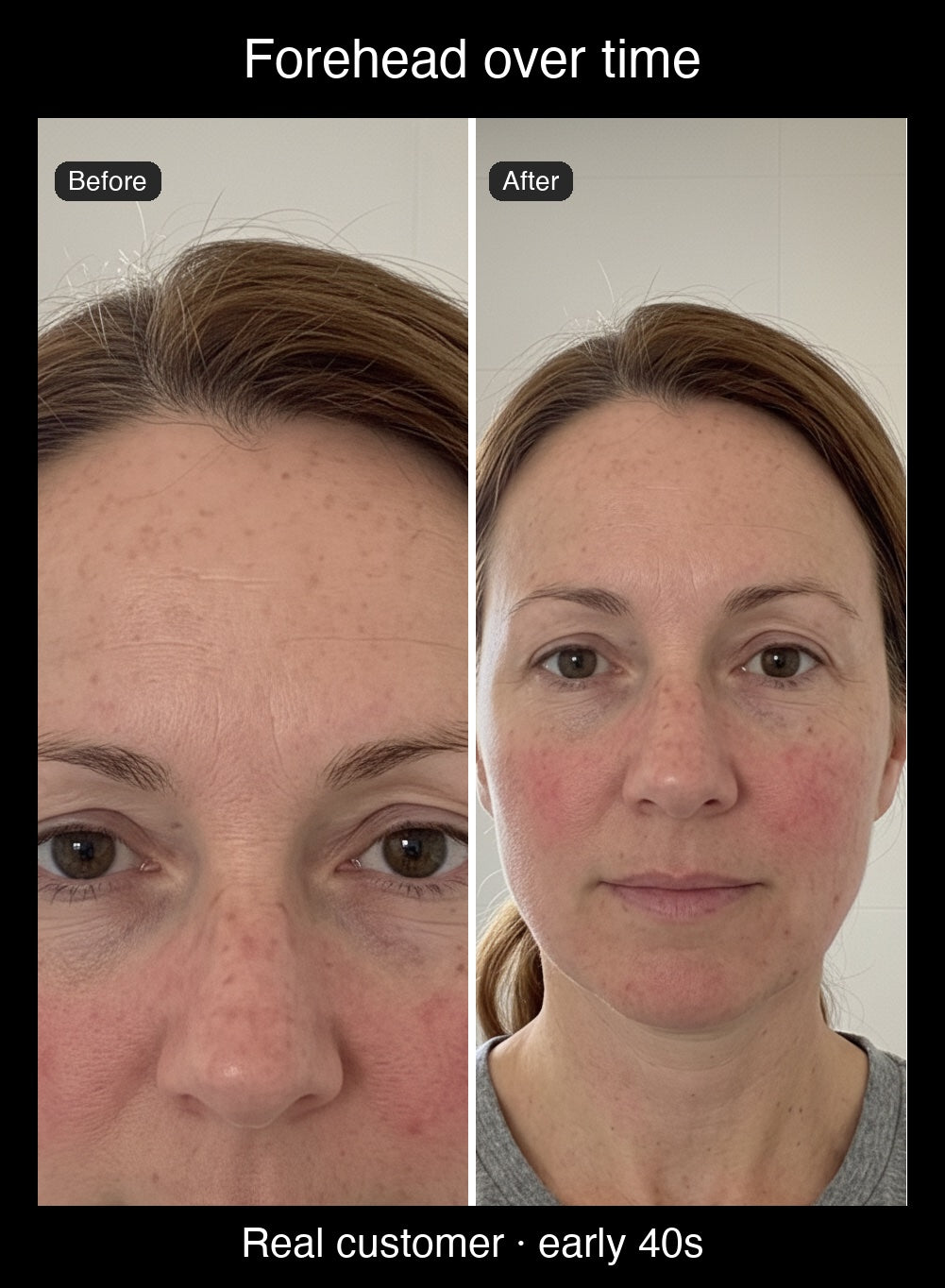
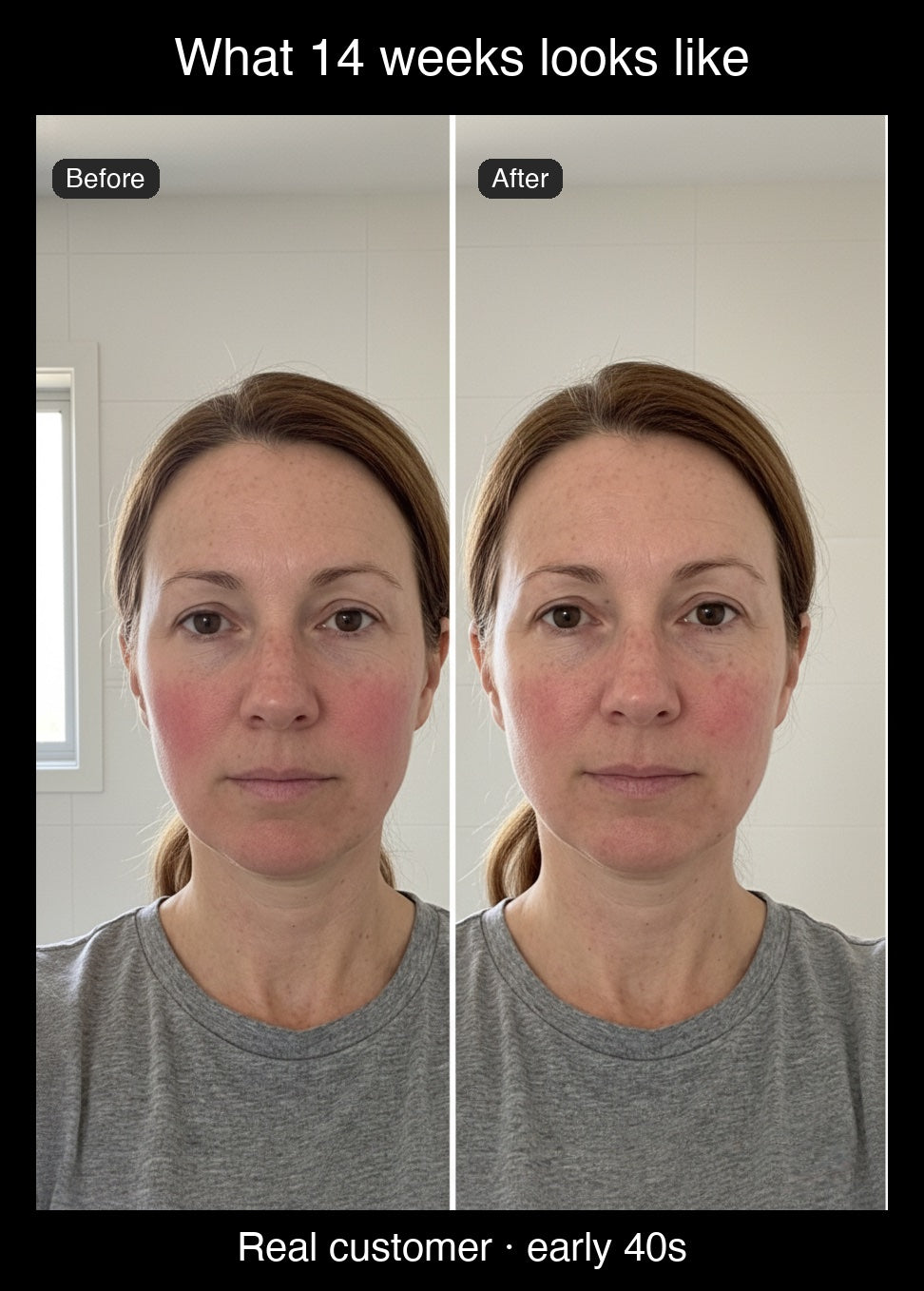
What's happened to my face in 14 weeks isn't dramatic. If you saw me at a coffee shop you wouldn't think "that woman has different skin than she did three months ago" — unless you were looking for it specifically.
Here's what's specifically different.
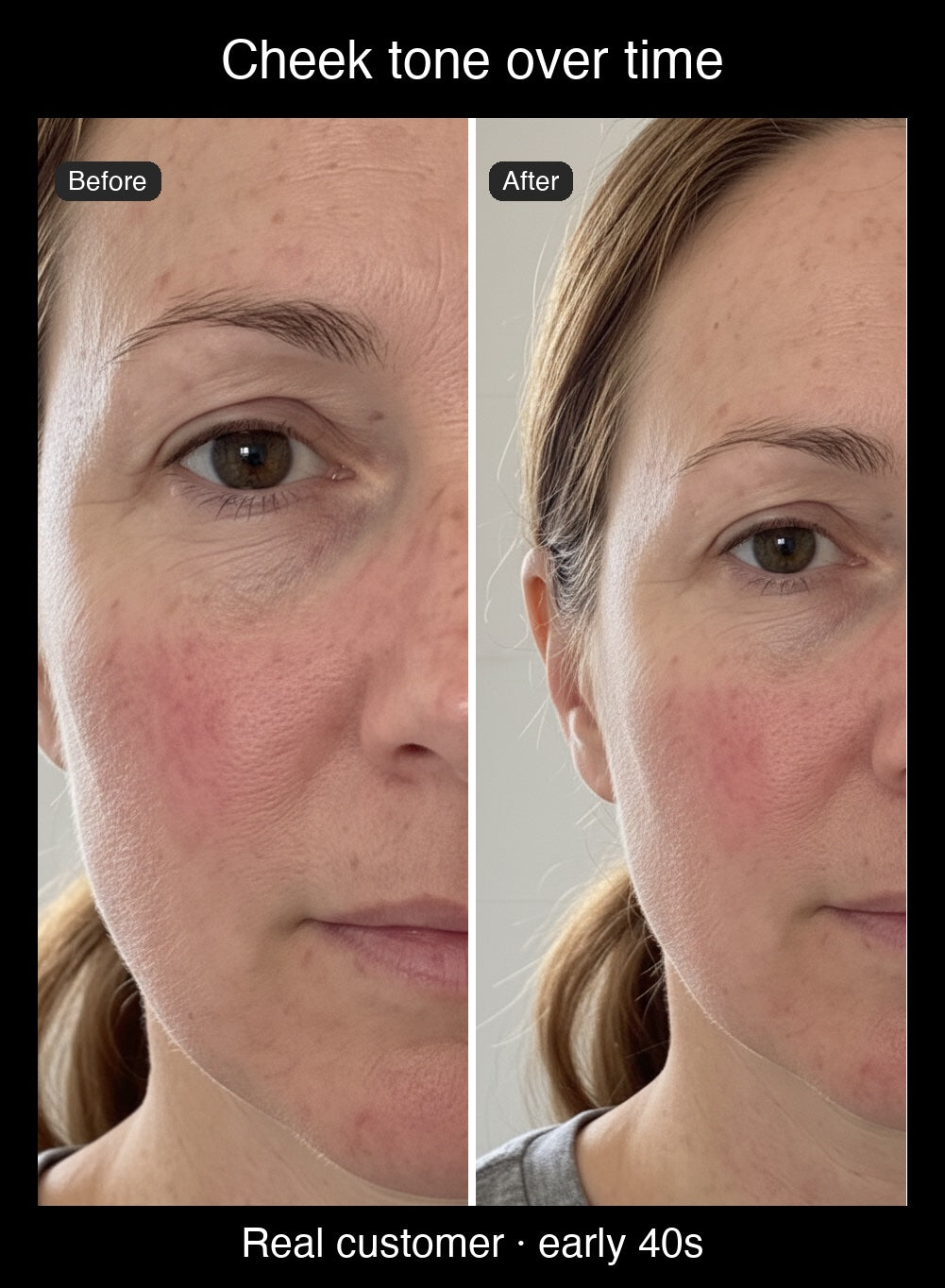
- I haven't worn concealer over the redness on my nose in three weeks. I've had that redness since I was 28. It's the lightest it's been in fifteen years.
- The slight hollowness under my cheekbones is less hollow. I noticed because the way my foundation sat changed.
- My husband — a man who genuinely cannot tell when I get my hair cut — said something three weeks ago. He asked if I'd done something. I told him about the mask. He said: "Oh. Yeah. Whatever you're doing, keep doing it."
- His sister — a hairstylist who notices haircuts ten minutes into a conversation — asked me at her kitchen table what I'd been using on my skin. He answered before I could.
Three women on the spreadsheet
Catherine — the friend with the $9,600-a-year clinic habit — bought a LuxeBeam in February after I texted her my spreadsheet. By month three she'd cancelled the standing appointment.
Her dermatologist called her last month to ask why she hadn't been in. She told her about the mask. Her derm said "that's the one I would have recommended if you'd asked me directly."
She's saved $4,400 so far this year.
Maria has the medicine cabinet of someone who has tried every product ranked by anyone, ever. She has abandoned every routine she's ever started.
I told her LuxeBeam was ten minutes hands-free while she did anything else. She asked: "You wear it while you read?" Yes.
She bought one. To my genuine amazement, she's used it four nights a week for nine consecutive weeks. "It's the only skincare thing I've ever maintained. Because there's nothing to maintain."
She has spent her entire adult life refusing to spend more than $30 on a skincare product, on principle. When I bought the LuxeBeam she made a face I can only describe as religiously offended.
Six months later, after watching me use it, she sat me down at Thanksgiving and asked me to walk her through the math.
By the end of the conversation she had ordered one. Eight weeks in: "My niece thought I'd been on vacation. I have not been on vacation."
PART 8 · THE MATHWhat I'd been spending on aging well, before this.
Three numbers I sat with before I bought one.
What I'd been spending per year: $3,000-$8,000, ongoing, with no fixed endpoint. Most of it on things the spreadsheet later told me wouldn't reach what the clinic protocol reaches.
What LuxeBeam costs: $397, once. Year one cost-per-use: about $1.92 (using it four nights a week). Year two and beyond: zero. Five-year daily cost: $0.22, less than the tax on coffee.
The $397 isn't ongoing. It isn't subscription. It isn't per-session. The device just keeps working.
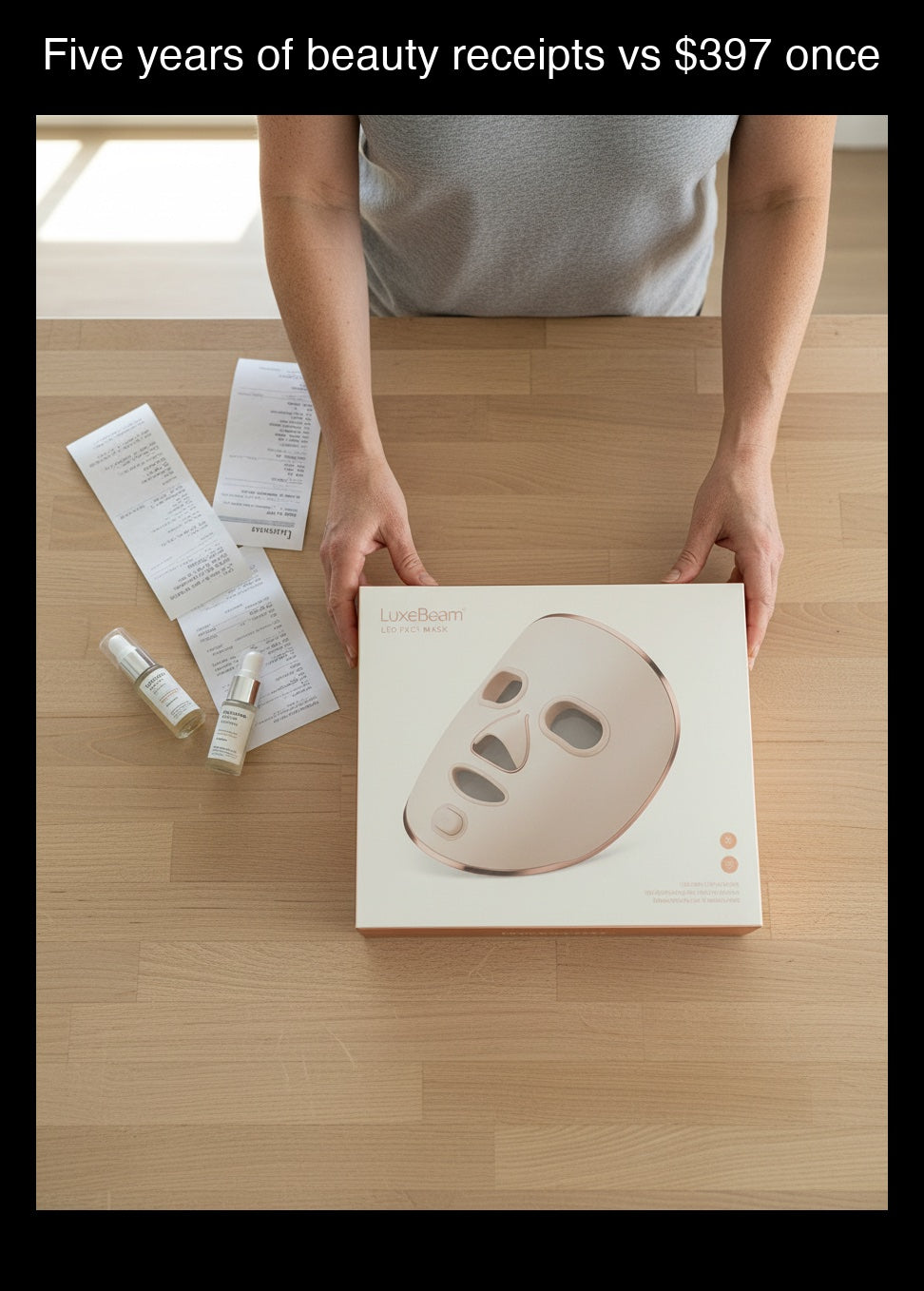
What's in the box at $397
| LuxeBeam Pro Mask — passes all 3 tests, FDA-cleared, full chin coverage, recessed-eye design | $397 |
| 30-Day Korean Glow Protocol PDF — exact session schedule, photo tracker, ingredient pairing | $49 |
| Private LuxeBeam community access (1 year) — weekly Q&As with the founder, real before/afters | $99 |
| $50 store credit at LMM toward future skincare | $50 |
| Free U.S. shipping | $20 |
| 60-Day Money-Back Guarantee | — |
| TOTAL VALUE | $615 |
| YOU PAY | $397 |
The Guarantee — the only reason I bought mine
The 60-day window is what got me to commit. Six months of spreadsheet research and I still wasn't 100% sure. Here's exactly how it works.
You buy it. Ships free in 3-5 business days.
You use it for 60 days. Three to five nights a week. Ten minutes per session.
If you don't see what I've described — texture changes, tone evening, redness softening — you email the brand at the address on the order confirmation.
You get a return label within 24 hours. Free return shipping. No restocking fee. No "we have to inspect it first." No "we'll give you store credit."
You mail it back in the original packaging.
You get a full refund within 5-7 business days of receipt.
Six steps. No hoops. I'm three months past the 60-day window. I kept it. So have all three women on the spreadsheet who bought one.
CLOSINGThree things will happen in the next ten minutes.
You'll close this tab. Fine. You'll continue thinking about LED masks. You'll see another one in a Sephora email next month. You'll click it. You won't run the three-things test on the spec sheet because the spec sheet won't be there. You'll buy one in five months that fails at least one of the tests.
You'll bookmark this. I know what bookmarks mean. I bookmarked Catherine's article — the one she sent me in February — and didn't come back to it for two weeks. Two weeks I lost on month one. Two weeks you don't have to lose.
Or you'll click below. $397 once. 3-5 days to your door. Start it on a Tuesday. Nothing in week one. Something around week four. Someone in your life will say something around week eleven.
If I'm wrong, you get your money back. I'm not wrong.